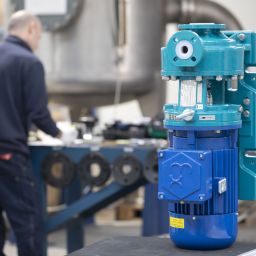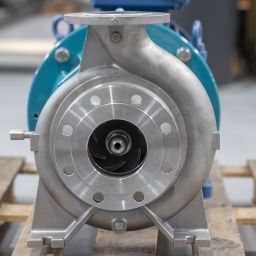

The sector of Magnetic drive pump is rapidly expanding in 2024 as well, representing an ideal solution for a wide range of industrial and non-industrial applications.
Although this technology was developed in the 1940s, it has only gained popularity in recent decades thanks to the numerous advantages it offers.
Recently, the need to comply with strict safety protocols required by many process industries has favored the adoption of this pumping technology, considered safer and more reliable than traditional centrifugal pumps. Magnetic drive pumps are indeed distinguished by a hermetic seal that does not suffer from wear of moving parts, making them ideal for transferring corrosive and hazardous liquids. Their chemical resistance and the absence of liquid leaks or harmful emissions make them particularly suitable for contexts where it is crucial to avoid any fluid leakage, both for safety reasons, such as environmental protection and the health of workers, both for economic reasons, as the costs of recovering losses can be very high.
Thanks to their completely sealed structure and lack of mechanical seals, these pumps require minimal maintenance throughout their service life. This allows for maintenance interventions to be spaced further apart, reducing both spare parts costs and maintenance times, as well as downtime.

Magnetic Drive Pumps: A General Overview
A magnetic drive pump, as anticipated, eliminates the need for mechanical seals, ensuring significant chemical resistance and preventing any liquid leakage. This makes it a safe and reliable choice for a wide range of pumping needs in industrial environments.
We will examine its operation, advantages, specific applications, and how to select the most suitable one based on different needs in more detail.
Specifications for the operation of magnetic drive pumps
Unlike a mechanical seal pump, in which the impeller is directly connected to the motor shaft, a magnetic drive pump works by harnessing the interaction between two sets of magnets: an external set and an internal set.
These magnets therefore do not come into direct contact, and the movement is guaranteed exclusively by magnetic force.
The Role of Magnets
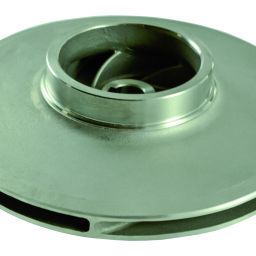
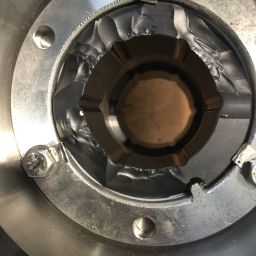
The external magnet is driven by the motor shaft and, thanks to the magnetic attractive force, induces the movement of the internal magnet. The latter is connected to the impeller via a ceramic shaft, allowing the impeller to move in complete isolation. The system is hermetically sealed by a containment cup that closes on the pump body.
This design eliminates the direct connection between the crankshaft and the impeller, significantly reducing the risk of fluid leakage.
The magnets used can be made from different materials, depending on the magnetic torque required by the application. Ferrite magnets can be used for low pressures, or rare-earth magnets such as samarium-cobalt or neodymium can be used for applications requiring high performance.
Application areas of magnetically driven pumps
The Magnetic drive pumps They are also widely used in water treatment, where they are used for managing additives in purification processes.
In fact, thanks to their design without metal parts in contact with the fluid, these pumps offer exceptional resistance, making them ideal for transferring aggressive, toxic, or corrosive fluids in industrial environments. They are particularly suitable for sectors where leaks are unacceptable, such as the food, pharmaceutical, and chemical industries.
For example, they are used in small cooling systems where it is crucial to prevent liquid leaks and contamination from gasket fragments that could compromise process efficiency. They are also suitable for transferring liquids at high temperatures, such as diathermic oil over 300°C.
They are also renowned for their high efficiency and reliability, and their installation is quick. Their ease of use, with no complex mechanical components, makes them particularly versatile.
They can be mounted on mobile platforms, facilitating the movement and discharge of liquids without the need for an operational team, minimizing downtime.
The 5 main advantages of magnetic drive pumps
Let's examine in more detail the series of advantages that make magnetic drive pumps an excellent choice for numerous industrial applications.
Security and efficiency
This type of pump is particularly suitable for handling difficult-to-seal chemicals, such as toxic, highly corrosive, or very expensive liquids. Their hermetic design ensures maximum operational safety, reducing the risk of leaks and minimizing exposure to hazardous substances. This is crucial for complying with the strict environmental and safety regulations in force in many process industries. Their ability to handle fluids without external emissions or contamination makes them ideal for sectors such as chemical, pharmaceutical, and food industries, where product purity is essential.
Reliability and reduced maintenance
Magnetically driven pumps are known for their exceptional reliability. Their design, free of metallic moving parts, significantly reduces mechanical wear and the risk of failure. This makes them particularly suitable for applications where spare parts can be difficult to obtain or expensive. Under normal operating conditions, these pumps can run continuously for over a decade without requiring extraordinary maintenance, offering an excellent return on the initial investment. Routine maintenance generally consists of periodic checks of bushing and o-ring wear, making them a low-cost maintenance solution.
Ease of installation and excellent performance
Installing magnetic drive pumps is simple and does not require complex alignment between the pump and the motor, simplifying the entire process and reducing commissioning time. Their robust construction makes them particularly well-suited for harsh operating conditions. They are designed to withstand high levels of mechanical stress and chemical, ensuring reliable performance even in demanding industrial environments.
Energy efficiency
These pumps use magnetic force to generate fluid flow, an energy-efficient method. This approach reduces energy consumption, contributing to greater operational sustainability and lower energy costs. Their ability to operate efficiently with liquids at various temperatures and viscosities therefore makes them ideal for applications where optimizing energy consumption is crucial.
Cost reduction
Thanks to their reduced maintenance, magnetic drive pumps offer a significant economic advantage over traditional pumps with mechanical seals. Costs associated with frequent repairs and the replacement of seals and other components are minimized. This allows for significant savings in terms of both direct costs and downtime, which can negatively impact productivity. The long operational life without significant failures further contributes to containing overall management costs.
How to choose a magnetic drive pump
When choosing a magnetic drive pump, it's crucial to evaluate the quantity of liquid to be handled, as well as operating pressures and temperatures. It's equally important to consider the operating environment and the chemical characteristics of the liquids to be transferred to ensure full compatibility with the selected pump.
Carefully considering all factors before purchasing is essential to ensure the pump meets all operational needs.
For example, if the pump will have to operate on liquids with a high concentration of solids, this aspect must be carefully considered.
In this case, you can opt for a pump such as the XTS-B – Steel magnetic drive pump with an open impeller from the CDR Pompe series, in which the circulation of fluid containing solid particles is allowed by the large flow channels within the pump.
If, on the other hand, the application environment requires temperatures that are not too high and conditions that are not too critical, the Series ETS A magnetic steel drag can be congenial.
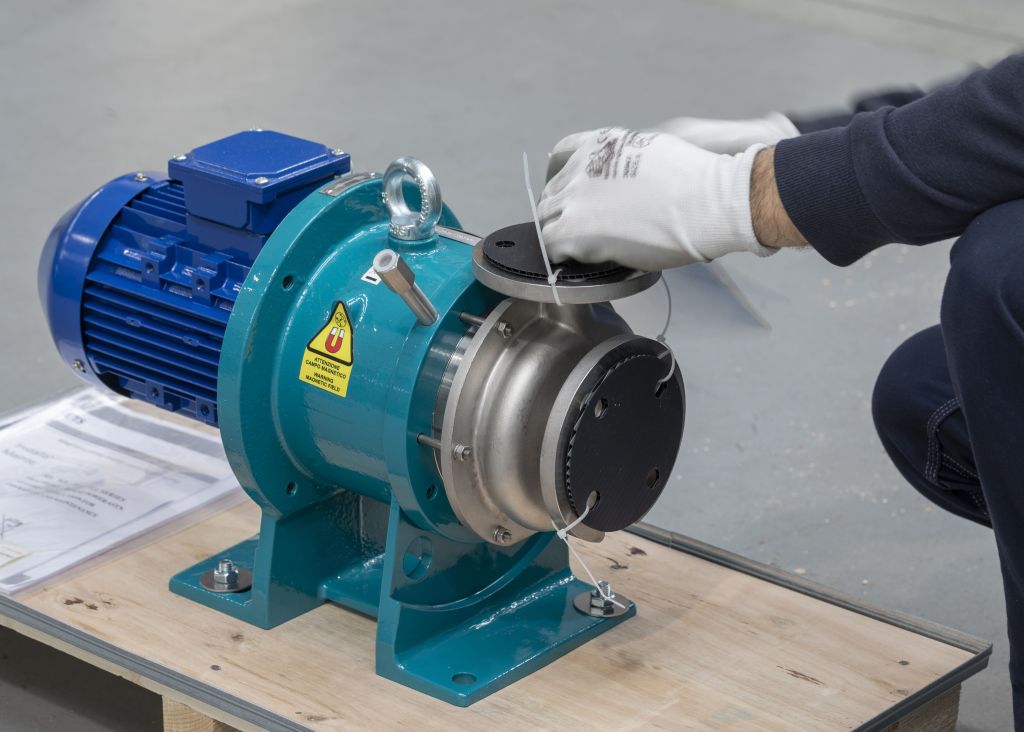
CDR Pompe Magnetic Drive Pumps
CDR Pompe is a leading manufacturer and supplier of magnetic drive pumps, offering innovative, high-performance solutions for a wide range of industrial applications.
Our lines are designed to ensure maximum reliability and safety in the handling of aggressive and corrosive liquids, even when operating under extreme pressure and temperature conditions.
Among the models offered, the Series stands out ETN EVO magnetic drive, suitable for both continuous and discontinuous pumping, and the model CDR Pompe Steel Magnetic Drive UTS.

Our pumps are designed for extremely simple installation and maintenance, thus reducing downtime and operating costs. Thanks to the implementation of Ansys simulation software, we have significantly reduced the axial and radial thrusts exerted on the impeller by the pumped liquid. For this reason, our pumps, if installed correctly and used in the absence of solids and dry running, can easily last from 15 to 20 years.
We provide accurate technical support and timely after-sales assistance, ensuring customers receive customized solutions and comprehensive service covering the entire product lifecycle.
Our continuous expansion and commitment to innovation have earned us international recognition. We operate in over 50 countries through a solid distribution network and reliable partners, demonstrating our dependability and the trust customers place in our solutions.
For more information about our production, Contact the sales team from CDR Pompe, who will be happy to help you choose the pump that best suits your needs.