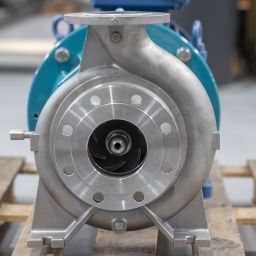

One mechanical seal pump it is one of the preferred choices for its reliable performance and ability to operate in harsh environments, making it ideal for many industrial and commercial applications.
Its main strength is the design that allows fluids to be kept separate in two distinct environments, preventing any communication between them. In the electric pumps, the mechanical seal allows the rotating shaft to come into contact with the fluid without causing leakage. For this reason, sealing systems are installed between the shaft and the pump housing, ensuring resistance to friction and effective pressure control.
Let's now examine this type of pump in detail, its benefits, and its main characteristics.

Mechanical seals for pumps: operation
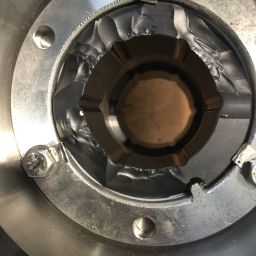
A mechanical seal pump like the ones present in the CCL line of CDR Pompe, represents an evolution compared to older pumping systems, overcoming their limits of resistance and productivity. In this type of pump, the mechanical seal acts as the interface between the static part (the housing) and the dynamic part (the shaft) of the pump.
The rotating section, which connects to the shaft, is sealed by an O-ring, an annular seal made of elastic materials and available in various sizes. This seal is designed to accommodate deformation and ensure an effective seal.
Systems of Mechanical seal for pumps generally include three contact points: two on the static part and one on the dynamic part, near the rotating shaft, which is particularly critical. This last element is essential for the system's effectiveness and comprises a surface with two bearings, one fixed and one rotating, designed to reduce friction. The bearings are kept under pressure and stabilized by a spring, thus preventing fluid leakage.
To ensure proper operation and prevent wear, bearings must be constantly lubricated with a fluid film during use. The distance between the bearings must be very precise, around 1 micron, to allow for smooth, frictionless movement and prevent leaks.
Single or double mechanical seal pump
A mechanical seal pump can be either single or double, like the models present in our UCL line.
The main difference between a single mechanical seal pump and a double mechanical seal pump lies in the number of sealing surfaces and their arrangement.
Here's an overview of the differences:
Single mechanical seal pump
- Number of sealing surfacesfeatures a single pair of mechanical seals.
- Structurethe seal is composed of a single pair of sealing faces, one mounted on the pump body and the other on the shaft.
- ApplicationsSuitable for applications where fluid pressure is relatively low and the risk of leaks is contained. It is generally used in less aggressive environments or with less corrosive fluids.
- Maintenance and costsusually simpler and less expensive to install and maintain than a double seal. However, if the single seal fails, it can lead to direct fluid leakage.
Double mechanical seal pump
- Number of sealing surfacespresents two pairs of mechanical seals.
- StructureIt has two sets of sealing faces, mounted in series, that work together to ensure a more secure seal. One pair of sealing faces is in contact with the pumped fluid, while the other is in contact with a flushing or venting chamber.
- ApplicationsSuitable for applications in high-pressure environments or with highly corrosive, toxic, or expensive fluids. Double seals are often used when the risk of leakage needs to be reduced or when safety is critical.
- Maintenance and costsmore complex and expensive to install and maintain than a single seal, but offers additional protection against leaks. If one of the sealing pairs fails, the other provides additional protection.
The advantages compared to pumps with traditional systems
Compared to a packing gland, which requires periodic adjustments or replacements due to friction on the seal, a mechanical seal pump offers numerous advantages.
It is more durable and consumes less energy, and also has other significant benefits, including:
- Loss reductionfluid leaks are minimal and mainly occur in the form of vapor.
- Tree protectionThis damages the pump shaft, ensuring greater durability and reliability.
- Minor maintenancerequires less maintenance thanks to the automatic adjustment of the internal springs.
- Energy efficiencyconsume less energy than packed glands.
- Contamination reductionless contamination of bearings and reduced risk of equipment corrosion.
- Vacuum maintenancealso ensures a vacuum seal, reducing air intake.
The adoption of mechanical seals therefore allows for reduced water consumption and operational costs, contributing to economic savings and greater sustainability.

Mechanical Seal Pumps vs. Mag-Drive Pumps
At CDR Pompe, we manufacture both mechanical seal pumps and Magnetic drive pump, each with its own specific characteristics and advantages.
Mechanical seal pump
Our mechanical seal pumps are designed to handle chemical liquids, abrasive fluids, and dirty industrial liquids.
Advantages
- Absence of metal adjustment mechanismssuitable for various industrial sectors.
- Corrosion resistancerequire quick and economical maintenance.
Disadvantages:
- Potential leaksPossibility of leaks to the external environment.
- Major maintenance shorter duration compared to magnetic coupling and more maintenance interventions, especially on the mechanical seal
Magnetic drive pump
The pumps magnetic drag They are designed without mechanical seals, using a two-part magnetic coupling to isolate the pumped liquid from the atmosphere. They are ideal for pumping hazardous liquids, as they are free from external leakage, but require clean liquids.
Advantages
- Hermetic designAbsence of external losses.
- Suitable for hazardous liquidsThey offer high operational safety.
- Minor maintenanceCDR magnetic drag reduces your plant maintenance costs.
Disadvantages:
- Need for clean fluidsNot suitable for fluids containing suspended particles
The choice between a mechanical seal pump and a magnetic drive pump depends on the specific requirements of your application. For more information and assistance in selecting the most suitable product, the team of professionals at CDR Pompe is available to provide support and personalized advice.
Contact us for any information.