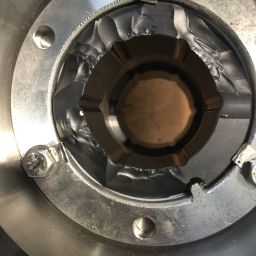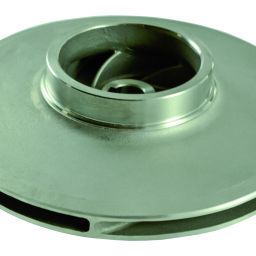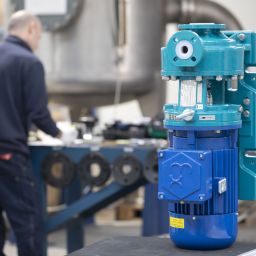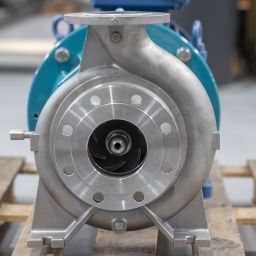

The ATEX pumps (acronym for ATmosphere EXplosive) are fundamental for ensuring safety in specific work environments, such as chemical, industrial e pharmaceutical. When working with potentially flammable substances, an explosive mixture can form. If ignited, even by external factors, it can cause dangerous fires or even explosions.
If you are faced with the so-called “fire triangle” (fuel + oxidant + ignition source), the absence of adequate protective devices can be disastrous for the company, the facilities, and the workers themselves.
Here's why working with ATEX certified pumps is fundamental to ensure safety in the presence of potentially explosive atmospheres. Almost the entire product range of CDR Pompe It can be used in these types of environments.
ATEX Directives for hazardous environments
The ATEX pumps They therefore become important in environments where there is a risk of explosion caused by even unintentional phenomena. Companies have the obligation to employ all possible means (procedures and equipment) to minimize any type of danger.
Potentially explosive atmospheres are understood to be a mixture of highly flammable substances (gases or dusts) and oxidizers, such as air, which, in certain concentrations and in the presence of an external ignition source (such as a spark or an overheated surface), can cause fires and explosions.
For this reason, the European Union has issued two directives on occupational health and safety, known as ATEX 2014/34/EU (also ATEX 114) and ATEX Directive 1999/92/EC (also ATEX 153), in the context of risk due to the presence of potentially explosive atmospheres.
- The Directive ATEX Directive 1999/92/EC establishes the minimum requirements for workplace safety in environments characterized by potentially explosive atmospheres, as well as establishing the criteria by which industrial products and equipment can operate;
- The Directive 2014/34/EU, it is the most recent, coming into force in Italy in 2016. This new regulation imposes mandatory certification for products and systems used in these environments.
ATEX Directives: Area Classification and Temperature
One of the main tasks of the constructor is to assess the risks arising from working in these potentially explosive atmospheres. Consequently, to adopt measures suitable to ensure the maximum possible safety.
Dangerous areas
The first step in this case is to classify the risk areas by applying two standards:
- IEC EN 60079-10-1: Explosive atmospheres due to the presence of gas;
- CEI EN 60079-10-2: “Explosive atmospheres due to the presence of combustible dust.
Regarding potentially flammable gases, three different zones are classified, defined Zone 0, Zone 1 e Zone 2:
| Zone | Description | Gas Presence |
| Zone 0 | The mixture of air and flammable substances in gaseous form is present for long periods or indefinitely (always present). | For more than 1000 hours per year |
| Zone 1 | The formation of a mixture of air and flammable substances in gaseous form is likely during normal work activities. | From 10 to 1000 hours per year |
| Zone 2 | The formation of a mixture of air and flammable substances in gaseous form is unlikely, or if it were to occur, it would be of very short duration. | Less than 10 hours per year |
Data source: ATEX Italy
Speaking of flammable dusts, on the other hand, the classification is divided into Zone 20, Zone 21 e Zone 22:
| Zone | Description | Gas Presence |
| Zone 20 | The explosive atmosphere, formed by a cloud of combustible dust in the air, remains permanently or for long periods of time. | For more than 1000 hours per year |
| Zone 21 | The explosive atmosphere, formed by a cloud of combustible dust in the air, occasionally forms during normal operations. | From 10 to 1000 hours per year |
| Zone 22 | The formation of an explosive atmosphere, formed by a cloud of combustible dust in the air, is unlikely. In the event of its formation, it would be short-lived. | Less than 10 hours per year |
Data source: ATEX Italia
Dangerous temperatures
Electrical installations and equipment operating in potentially explosive atmospheres must also be classified according to another parameter: the maximum surface temperature they develop. This is because ignition can also occur through the contact of gas/air with hot surfaces. The material used must always be below the auto-ignition temperature of the explosive agents.
The classification for the ATEX pumps go from T1 to T6:
| Temperature Classification | Maximum appliance surface temperature | Ignition temperature |
| T1 | 450° | 450°C |
| T2 | 300° | 572°F |
| T3 | 200° | 400°F |
| T4 | 135° | 275°F |
| T5 | 100° | 212°F |
| T6 | 85° | 185°F |
Data source: ATEX Italia
CDR pumps for ATEX environments
The CDR pump can be custom-made to the specific needs of the client, and are designed to work extremely safely in environments with potentially explosive atmospheres according to precise parameters. Almost our entire range of industrial pumps are highly functional and safe in zone 1 and 2 of the ATEX directive, and are also rigorously tested and controlled to fall within temperature classes ranging from T2 to T6 inclusive.
Furthermore, CDR meets the requirements with both magnetically coupled pumps and magnetically sealed pumps.
UTS: Stainless steel top-of-the-line process pump with closed impeller

The’Magnetic drag UTS It is our flagship steel process pump with a closed impeller, suitable for ATEX environments. Top of the line in the CDR range, it is perfect for various fields of application, especially for continuous 24/7 use.
This type of ATEX pumps are suitable for handling toxic, flammable, and hazardous liquids. Thanks to internal European certification, they are also perfect pumps for handling non-conductive liquids.
With an allowable temperature range from -140°C to +300°C, these types of pumps have numerous applications, such as distillation, basic chemistry and fine chemistry processes, temperature control, and tank loading/unloading.
ATEX Pumps for Special Applications: the XTS and XTN Series
XTS – B: Steel magnetic drive pump with open impeller

The XTS Pump – B It represents the ideal solution in case of suspended solids. In fact, this series of pumps is suitable for applications with corrosive, toxic, or dangerous liquids, where the presence of a considerable number of solids would clog a standard magnetic drive pump.
These ATEX pumps are certified according to European regulations to work in Zone 1 indoor and outdoor. They also guarantee zero emissions and very low maintenance costs.
The XTS–B pump is ideal for a variety of applications, such as:
- Fine Chemicals Services
- Basic Chemistry Services
- Pharmaceutical Industries (APIs)
- Reactor Process Solution Transfer
XTN-BL – Magnetic-drive centrifugal pump with open impeller

This is another top-of-the-line pump from CDR. Here too, the XTN – BL Pump It is suitable for working with corrosive, toxic, and hazardous liquids and is a better choice than traditional magnetic drive pumps.
With an admissible temperature reaching up to 160°C, it complies with ATEX regulations for indoor and outdoor Zone 1.
The wide internal flow channels ensure fluid passage even with a high presence of solid particles. The internal rotating shaft, made of stainless steel, has no welds or joints. This guarantees continuous recirculation of the pumped liquid between the impeller and the casing.
At CDR Pompe, we are Italian and international leaders in the process pump industry and service, magnetic drive and mechanical seal centrifuges. Our business extends to 50 countries through a network of experts and trusted partners. Whatever your needs, we'll find the perfect solution thanks to our sales team. Contact us And together we'll find the pump that's right for you.